Why 400 People Attended Our Son’s Funeral (and What it Says About Legacy)
By Ken and Mary Sue Grein
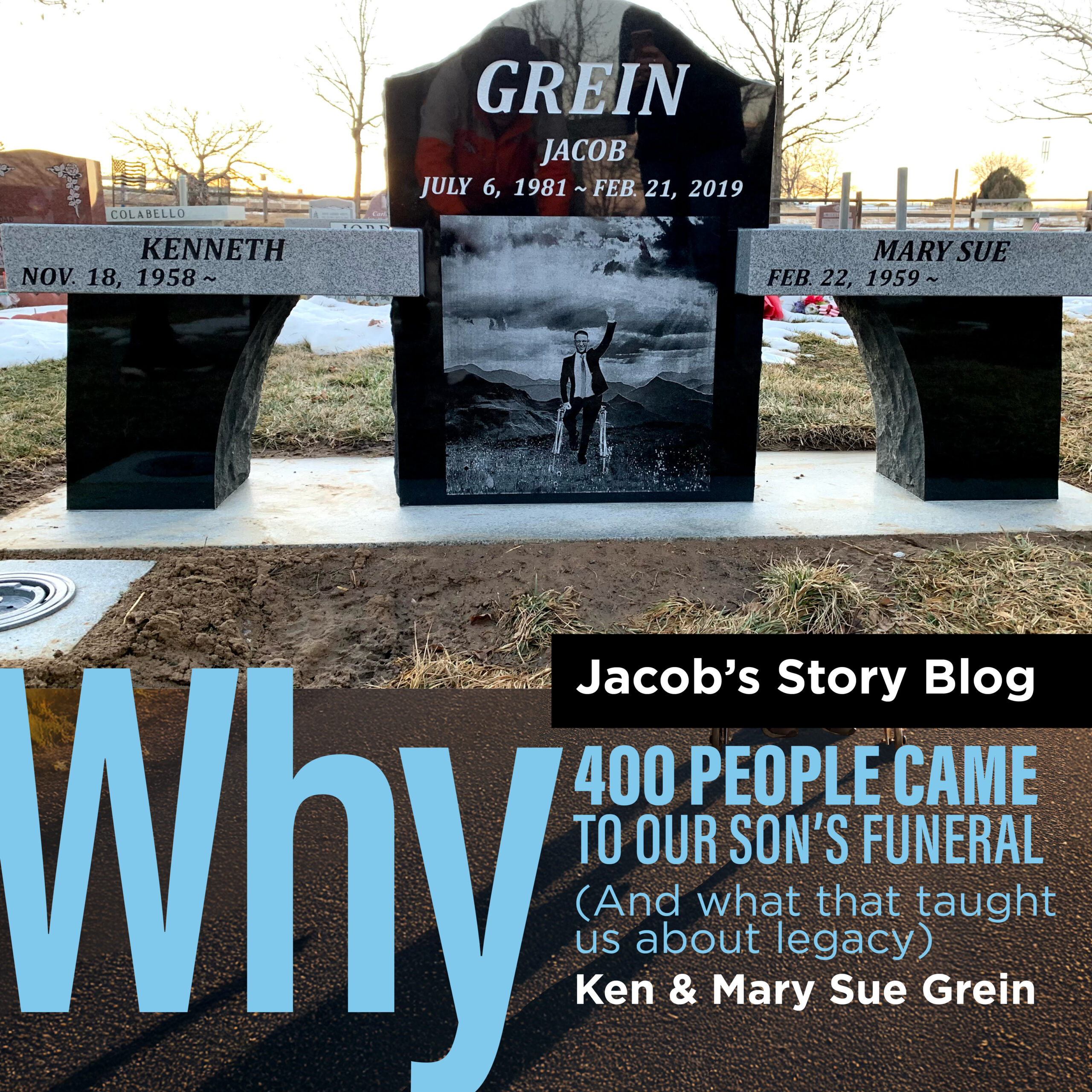
When we walked into the funeral home and saw 400 people filling every seat, spilling into the aisles, and standing along the walls, we were stunned. This was for Jacob, our son, who couldn’t hear, couldn’t speak clearly, and couldn’t walk without assistance. Yet somehow, this young man touched more lives than most people who seem to have everything.
In that moment, looking out at faces from every season of Jacob’s 37 years—doctors and nurses, coworkers from Goodwill, friends from church, classmates who had learned sign language just to talk with him—we finally understood what real legacy looks like.
The Gift of Unconditional Acceptance
Jacob had a supernatural ability to make people feel safe. Without being able to hear the cruel words people say to each other, he seemed protected from the cynicism that hardens most of us over time. Maybe his deafness was actually a blessing in disguise. He couldn’t hear gossip, criticism, or the casual cruelty that damages relationships, so he approached every person with fresh hope and genuine love.
People were drawn to Jacob because he lived out Philippians 4:8 without even realizing it: “Whatever is true, whatever is noble, whatever is right, whatever is pure, whatever is lovely, whatever is admirable—if anything is excellent or praiseworthy—think about such things.” He didn’t know how to hold grudges. When people had hurts or conflicts, Jacob had an uncanny way of mending fences and bringing unity, not through words, but through presence.
One of his friends, who held a high position in the local school district, once said, “Jacob was my best friend. He had unconditional love for me, and I felt completely safe with him.” This successful educator, surrounded by colleagues and subordinates all day, found his truest friendship with a young man who earned five-dollar paychecks and communicated mostly through hugs.
What 400 People Taught Us About Love
As we looked at that packed funeral home, we realized something profound: we had never once felt judged, ridiculed, or rejected by our son. Not once in 37 years. While the rest of us spend our lives seeking validation and fearing rejection, Jacob simply offered love without conditions or expectations.
He gave hugs freely. He offered Kleenex when people cried. He found ways to tease gently and bring laughter when things got too heavy. He had this gift of crossing gaps that separate most people—gaps of education, ability, social status, and communication styles. Somehow, in a world obsessed with being heard, Jacob’s silence spoke louder than anyone’s words.
Before the funeral, we had told people to invite family and friends they hadn’t seen in years. We sensed God wanted to use Jacob’s celebration of life to bring restoration to broken relationships. We were right. In the weeks that followed, we heard story after story of people reconnecting, forgiving, and healing because Jacob’s life reminded them what really matters.
The Legacy That Changes Everything
Legacy isn’t about what you accumulate or achieve—it’s about how many lives you touch and transform. Jacob never earned a college degree, never made a fortune, never gained fame or recognition. But he left behind something far more valuable: 400 people who were better for having known him.
In a culture that measures worth by productivity and success by achievement, Jacob’s legacy stands as a beautiful rebuke to our misplaced values.
He taught us that every day is a gift and every person has a life worth living—not because of what they can do, but because of who they are. His legacy wasn’t written in accomplishments; it was written in hearts. And on the day we said goodbye, 400 hearts stood up to testify that one “disabled” young man had somehow managed to live more fully than most people who have all their faculties.
That’s the kind of legacy that changes everything—not just for the person who lives it, but for everyone blessed enough to witness it.
Sometimes the people who seem to have the least to offer end up giving the most precious gifts of all.
See “Finally, I Can Tell My Story” trailer:
Share this post!