Back to Blog

The Gift That Cost Everything: Our Son’s Life-Saving Kidney Transplant
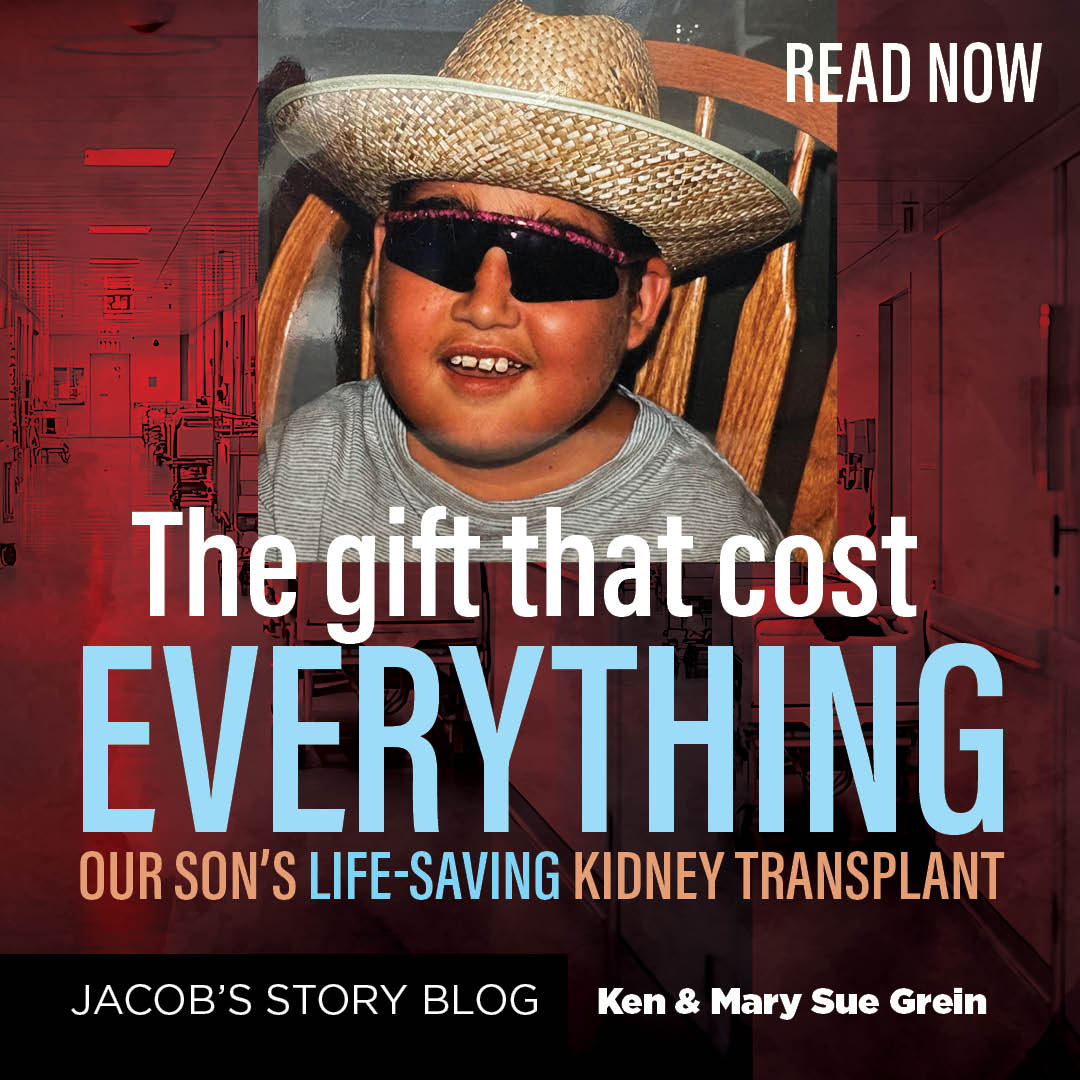
The Gift That Cost Everything: Our Son’s Life-Saving Kidney Transplant

By Ken and Mary Sue

The call came at 3 AM on a Tuesday. After two years of peritoneal dialysis and waiting, Jacob finally had a kidney match. But as we raced to the hospital in the pre-dawn darkness, we carried a crushing knowledge—somewhere, another family was experiencing the worst night of their lives so our son could have his best chance at life.

For two years, we’d lived in what we called “the waiting room of life”—that space between knowing Jacob needed a transplant and actually receiving one. The doctors had been clear: peritoneal dialysis wasn’t a permanent solution. Jacob’s kidney function was failing, and without a transplant, we’d eventually lose him.

During those months of waiting, we wrestled with questions that had no easy answers. Who would give up a kidney for our son? Would someone have to die for Jacob to live? Would his body accept or reject this gift? Because of his multiple disabilities, would doctors decide he wasn’t worth saving compared to someone else? “The heart of man plans his way, but the Lord establishes his steps” (Proverbs 16:9). We had to trust that God’s timing was perfect, even when ours felt urgent.

The Morning Everything Changed

When we discovered through a newspaper article that Jacob’s kidney came from a teenage suicide victim, our celebration turned complex. Within a four-hour window, we experienced the full spectrum of human emotion—immense gratitude colliding with devastating grief for a family we’d never meet.

We were preparing Jacob to receive new life without telling him someone had died to give it to him. How do you explain to your son that his miracle came at such a cost? Something felt wrong about accepting this gift that we simultaneously desperately needed and wished we didn’t have to receive.

We wanted to thank the donor family, to somehow bridge the gap between their loss and our gain, but hospital protocol kept us separated. We believe God allowed us to connect the dots that morning so our family could pray for theirs. In that moment, we understood something profound about sacrifice—that the greatest gifts often come wrapped in the deepest sorrow.

Twenty-Four Years of Borrowed Time

In 1995, doctors told us they only had ten years of data on kidney transplants. They couldn’t promise Jacob’s new kidney would last longer than a decade. We faced the possibility of going through this entire process again when Jacob was older, potentially sicker, and the outcomes less certain.

But Jacob’s transplant gave him twenty-four years of life—more than double what the medical data suggested possible. Twenty-four years of watching movies with his family, of going to work each morning with pride, of hugging his sisters and bringing joy to everyone around him. “For I know the plans I have for you, declares the Lord, plans for welfare and not for evil, to give you a future and a hope” (Jeremiah 29:11).

We became vigilant guardians of that gift, never missing anti-rejection medications, never taking a single day for granted. We knew that doing our part was essential to honoring both the medical miracle and the family who made it possible.

What We Learned About Gifts and Sacrifice

Modern medicine can tell you what it can treat, prevent, and diagnose, but it can’t explain why some people receive miracles and others don’t. Ultimately, we learned to put our trust not in medical outcomes, but in the God who had already kept Jacob alive through so many impossible situations.

Jacob’s transplant taught us that the most precious gifts often come at the highest cost—not to us, but to others. Somewhere, a family said goodbye to their teenager so our son could say hello to decades more of life. That knowledge humbled us daily and motivated us to make every year, every day, every moment count.

When Jacob passed away in 2019, that kidney was still functioning. Twenty-four years of bonus time, all because someone else’s family chose to give life in the midst of their deepest loss. That’s not just medical success—that’s grace made visible.

Sometimes the greatest miracles aren’t about what medicine can do, but about what love is willing to sacrifice.
Stories
Back to Blog

How a Five-Dollar Paycheck Redefined Success

How a Five-Dollar Paycheck Redefined Success

By Ken and Mary Sue

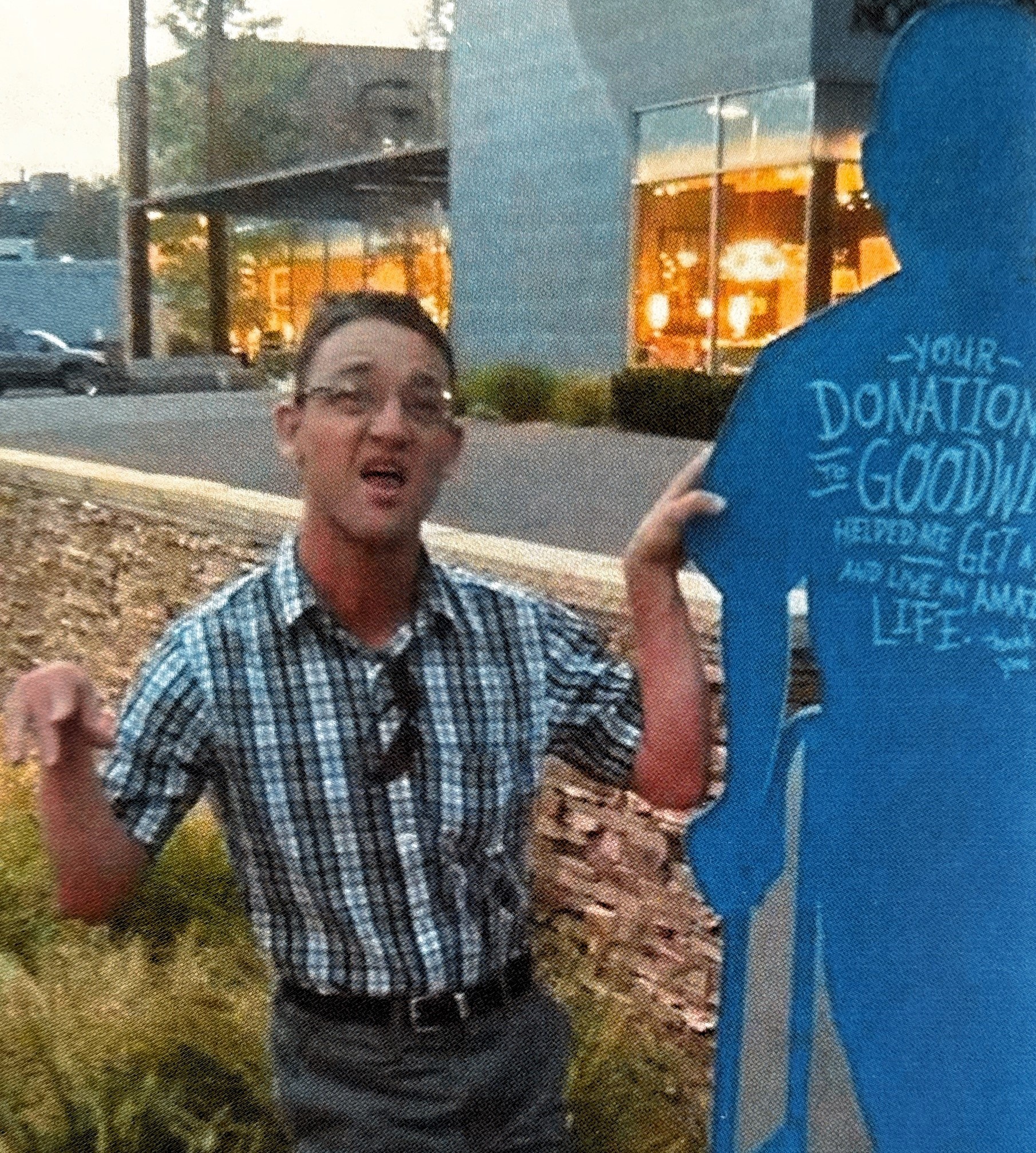
The day Jacob received his first five-dollar paycheck from Goodwill Industries, he held it like it was a hundred-dollar bill. His face lit up with the same pride we’d seen in Fortune 500 CEOs, and in that moment, we realized everything we thought we knew about success was completely wrong.

Jacob couldn’t hear, couldn’t speak clearly, and needed assistance to walk. Yet watching him celebrate that small paycheck with pure joy, we suddenly understood what Jesus meant when he said, “Truly I tell you, unless you change and become like little children, you will never enter the kingdom of heaven” (Matthew 18:3). Jacob had something we’d lost in our pursuit of conventional success—the ability to find genuine fulfillment in simply doing his best.

The Award That Changed Everything

When Jacob received the regional Power of Work Award, we sat in that auditorium surrounded by other families celebrating their loved ones’ achievements. But something struck us as different about Jacob’s story. While others had overcome addiction or homelessness to find employment, Jacob had overcome the world’s assumption that he had nothing valuable to contribute.

Every morning, he’d struggle to get ready for work, his disabilities making simple tasks exhausting. Many days he didn’t feel like going, but he’d push through anyway. Not because he had to—his disability benefits would have supported him—but because work gave him purpose. He understood something profound: “Whatever you do, work at it with all your heart, as working for the Lord, not for human masters” (Colossians 3:23).

His coworkers didn’t just admire his persistence; they were transformed by it. Here was someone who found joy in tasks they considered mundane, who celebrated small victories they’d stopped noticing. Jacob’s five-dollar paychecks taught everyone around him that worth isn’t measured by the size of your contribution, but by the heart you bring to it.

What Jacob Taught Us About Real Success

When Jacob was young, we exhausted ourselves trying to make him “normal.” Countless therapy sessions, medical appointments, and interventions—all aimed at helping him fit the world’s definition of success. But somewhere along the way, Jacob started teaching us instead.

He redefined winning when he cheered louder for his siblings’ soccer games than they did for themselves. He transformed our understanding of productivity when snapping green beans became less about finishing the task and more about being together. When his greatest joy each day became helping his sister take off her work shoes, we realized we’d been measuring the wrong things all along.

The phrase “it’s a good day” took on sacred meaning in our home. Not because everything went perfectly, but because we learned that real success comes from recognizing life as the gift it is, regardless of circumstances.

The Deeper Truth

Jacob never made a six-figure salary or earned advanced degrees. He never owned expensive things or achieved what society calls status. But he accomplished something far more significant—he taught everyone around him what it means to live with authentic purpose.

In a world obsessed with climbing ladders and accumulating achievements, Jacob showed us that real success might be found in the quiet moments of dignity, in perseverance without recognition, in bringing joy to ordinary tasks. He proved that the most profound accomplishments often happen in the spaces between what the world notices.

Our son didn’t overcome his disabilities to become successful. His disabilities became the very foundation of a success so deep and meaningful that it changed everyone who witnessed it. That’s not just inspiring—that’s revolutionary.

“But God chose the foolish things of the world to shame the wise; God chose the weak things of the world to shame the strong” (1 Corinthians 1:27).

Stories
Back to Blog

Fighting for Jacob in Middle School

Fighting for Jacob in Middle School

By Ken and Mary Sue

After surviving 137 days in the NICU and defying medical predictions, we thought the hardest battles were behind us. We were wrong. Sometimes the most devastating fights aren’t in hospital rooms—they’re in school conference rooms, where educators who are supposed to advocate for your child instead try to limit their potential.

Jacob’s educational journey began beautifully in a special needs preschool at age 4, then flourished in deaf education and special needs programs through age 19. Those early deaf programs were exceptional, and Jacob found something we hadn’t dared hope for—belonging.

He had a group of friends who genuinely loved each other. They learned sign language together and navigated the “hearing world” as a united team. Watching them support one another was incredible. Some of Jacob’s friends went on to pursue higher education, find meaningful employment, and get married. They were proof that disability doesn’t define destiny.

But Jacob had a different journey ahead. His multiple disabilities made it difficult for him to learn past a third-grade academic level, even though his social abilities were much higher. It was tough to reconcile—here was our son who could connect with people, who had friends who adored him, but who struggled with basic academic concepts. We learned to celebrate his strengths while accepting his limitations.

The transition into middle school changed everything, and not in a good way.

When Everything Went Wrong

We discovered Jacob had been placed in what the school called the “disabled group.” Suddenly, he was no longer among his deaf friends who understood him and communicated with him. To make matters worse, his individual needs were no longer being prioritized. His Individualized Education Plan (IEP)—the legal document that should have protected his right to appropriate education—had been redirected entirely.

The new deaf education teacher didn’t want Jacob in her classroom. Years of advocacy, relationship-building, and carefully constructed educational plans had been sabotaged by one person’s decision. We felt betrayed and furious.

A quick visit to the school revealed the full scope of the problem. Mary Sue arrived just in time to watch Jacob’s “disabled class” literally stop in the middle of a lesson because of another student’s behavioral outburst. The teacher couldn’t manage the classroom, and instead of learning, this became an opportunity for Jacob to observe and potentially mimic inappropriate behavior.

Since Jacob clearly knew right from wrong and had never been a behavioral problem, we couldn’t stand by and watch him be placed in an environment that would teach him to act out. We immediately set up a meeting with the principal, teacher, and an educational advocate.

Fighting for What’s Right

IEP meetings are incredibly intimidating for parents. You’re sitting across from a table full of educated professionals who think they know what’s best for your student, often without truly listening to what parents know about their child’s potential and needs.

We had learned so much about realistic educational planning and appropriate goal-setting over the years, but Jacob was unique. His IEP had to be changed, and we were prepared to fight for it. This was long before “inclusion” had been widely accepted in education, but we knew Jacob needed to keep growing and learning in a positive environment. Otherwise, he would lose heart and become discouraged.

We brought an advocate who wasn’t afraid to challenge the system. He stepped in for us and validated Jacob’s worth and potential. He wasn’t intimidated by the teacher who refused to allow Jacob into her classroom, or by the principal who was backing her up.

In that tense conference room moment, with battle lines clearly drawn, something miraculous happened. The speech and language teacher spoke up. In a room full of people saying “no” to our son, she said “yes.”

She offered to take Jacob with her into regular education classes. She would interpret for him and teach him at his level while allowing him to interact with typical peers. She was essentially offering to go above and beyond her job description to meet Jacob exactly where he was.

It was exactly what Jacob needed—the chance to interact with his peers and friends, and even make some new ones. He still couldn’t read or write at grade level, but he was liked and accepted by many students who could. His social gifts were being honored instead of hidden away.

What We Learned

That day taught us that sometimes the system fails, but individuals within that system can still choose to do what’s right. One teacher’s willingness to see Jacob’s potential instead of just his limitations changed the trajectory of his middle school experience.

We learned that fighting for your child isn’t just about being difficult—it’s about ensuring they have every opportunity to grow, learn, and contribute in their own unique way. Jacob couldn’t perform at grade level academically, but he had so much to offer his peers in terms of friendship, loyalty, and joy.

Jacob’s educational journey reminded us once again that some people see limitations while others see possibilities. The medical professionals in the NICU had focused on what Jacob couldn’t do. Some educators made the same mistake. But there were also people—like that speech and language teacher—who chose to see what Jacob could contribute. They understood that education isn’t just about academic achievement; it’s about helping every child discover their place in the world.

That middle school fight wasn’t just about Jacob’s IEP. It was about his right to be valued, included, and given every chance to shine in his own unique way.

Sometimes the most important lessons aren’t found in textbooks—they’re learned when someone believes in your child’s potential and fights to make sure they get every opportunity to reach it.

Stories
Back to Blog

The Love Story That Started with a Sabbatical (And Why It Almost Ended Before It Began)

The Love Story That Started with a Sabbatical (And Why It Almost Ended Before It Began)

Author: Ken and Mary Sue Grein

October 10, 2025

Every great love story has its moments of uncertainty—those crossroads where everything
could change with a single decision. Ours almost ended before it truly began, with what Ken
diplomatically called a “sabbatical.” Looking back now, we can see how God was already
preparing us for the deeper commitments that would define our entire lives together.

Where It All Started

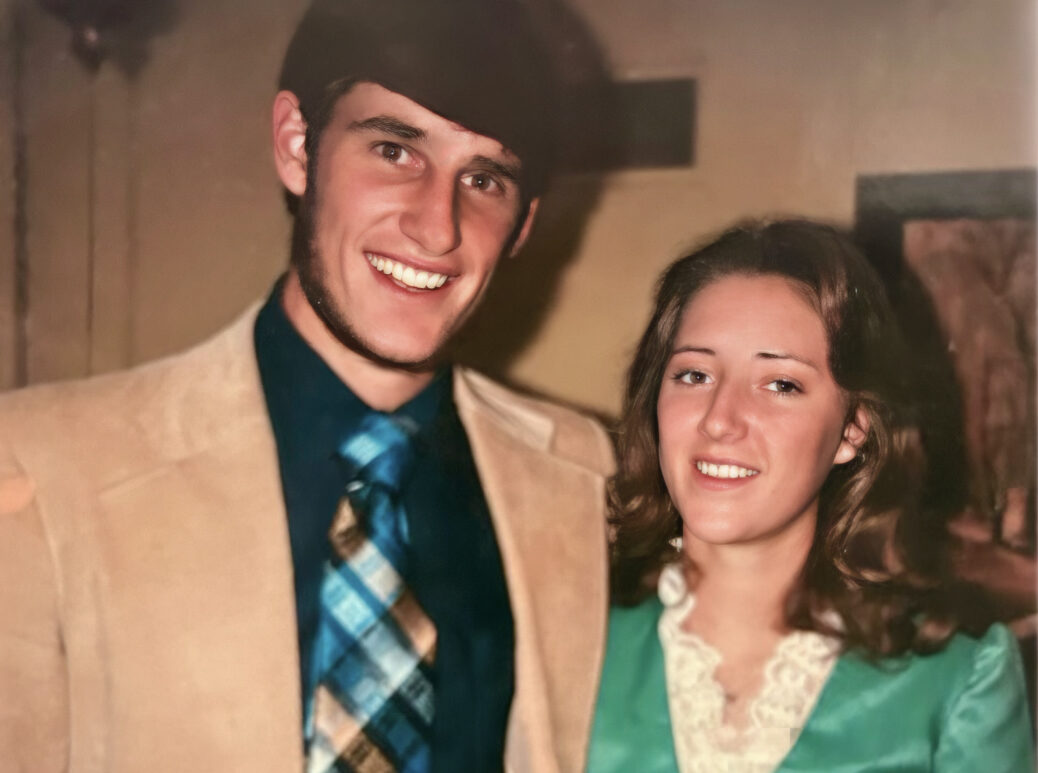
We headed off to Rockmont College at 18, each carrying our own dreams and uncertainties.
Ken was there on a basketball scholarship, driving 30 minutes from his family’s farm each day.
Mary Sue was living in the campus dorm, chasing hopes of a musical career.

Ken was a Christian and handsome. Mary Sue was a Christian too, but shy—though undeniably
beautiful. It was the classic college setup: two young believers finding their way in a new world
of possibilities.

The Moment Everything Changed

Orientation came and went, and Mary Sue had already noticed Ken—really noticed him. Then
came their first class together, when the professor completely butchered “Mary Sue Mykytiuk”
during roll call. It’s a challenging name to pronounce, but that moment of shared embarrassment
broke the ice. Suddenly Ken was noticing Mary Sue too.

He no longer resisted the tug on his heart, and she welcomed his eye contact with relief and
excitement. It all became wonderfully real during the Glen Eyrie Retreat, when Ken was playing
a spontaneous football game with fellow students just below the balcony where Mary Sue stood
with her new friends. Something magical happens when you realize the person you’re interested
in is watching you—and cheering you on.

The Chocolate Pie Incident

Back on campus, romance took on a playfully messy turn. During a campus fundraiser, Mary
Sue bought the chance to throw a chocolate pie in Ken’s face. The money was already paid,

and she was committed to the deed. But when she wound up to throw that chocolate pie, Ken’s
defensive instincts kicked in—no thank you to a face full of chocolate! She missed completely.

But that playful act turned into something more meaningful. The laughter, the connection, the
obvious chemistry—it all drew Ken in deeper. He started showing up at the library where Mary
Sue worked, finding excuses to check her out (literally and figuratively). Their romance was
blossoming beautifully.

When Doubt Crept In

God had led each of us to this college without giving us any hint of the journey we would share
together. He had a plan and purpose for “us” but sometimes even the best plans hit
unexpected bumps. That’s what happened when Ken saw his basketball buddies getting
together after games, going to movies, hanging out in ways that his budding relationship didn’t
allow for.
He didn’t want to be the odd man out. Feeling disconnected from his teammates and uncertain
about the seriousness of what was developing between us, Ken made a decision that would test
everything: he asked Mary Sue for a sabbatical.

He needed time for soul-searching, to answer the question: “Am I ready to take the next step
and commit to a relationship?” It was actually a mature thing to do, coming from a serious
person who understood that commitments were important. If he made one, he intended to keep
it—as in “till death do us part.”

On the other hand, he was missing out on what felt like a whole lot of fun with his friends.

So our love story came to an abrupt end, just like that.

The Crushing Reality

Mary Sue was devastated. She had always been the one to end relationships in the past, afraid
of her own commitment issues. Now she knew exactly how it felt to be on the receiving end of
that decision, and it was crushing.

For a week that felt like an eternity, our future hung in the balance. Two young people who had
found something special were now wondering if it was worth the sacrifice of other experiences
and friendships.

The Decision That Changed Everything

Thankfully, after that short but intense week of reflection, Ken felt certain about what he wanted.
He wanted to pursue a relationship with Mary Sue, fully and intentionally. That careful
consideration—painful as it was—forged in both of us a bond fueled by lasting commitment that
continues to this day.

We didn’t know it then, but our son Jacob’s journey would teach us the deepest truths about
what real love and commitment actually mean.

What We Learned About Love

Our college romance taught us that true love goes deeper than any success we might achieve
through education or career. It’s love that gets tested and tried in the fire of adversity—like when
we chose love over fear in that NICU room. It’s love that chooses life, even when the world
suggests otherwise.

That sabbatical week, as difficult as it was, became the foundation of something unshakeable.
When Ken chose to return, he wasn’t just choosing Mary Sue—he was choosing the kind of
commitment that would carry us through 37 years of raising a son the world deemed “unfit to
live.”

Looking back, we can see that God was already preparing our hearts for the deeper sabbaticals
life would require—the times when we’d have to step back from our own plans and desires to
embrace His greater purpose for our family.

That was the real commitment—not just to each other, but to whatever God had planned for us
together.


Sometimes the relationships that almost end before they begin become the ones that teach us
the most about what forever really means.

Stories
Back to Blog

137 Days in the NICU: What No One Tells You About Medical Miracles

137 Days in the NICU: What No One Tells You About Medical Miracles

Author: Ken and Mary Sue Grein
Written: August 1, 2025

Every single day in the NICU was grueling. Our son Jacob was barely holding onto life, and we
lived in a constant state of suspended breath—hoping, praying, and bracing ourselves for
whatever news awaited us behind those sterile doors.

The Daily Ritual of Hope and Fear

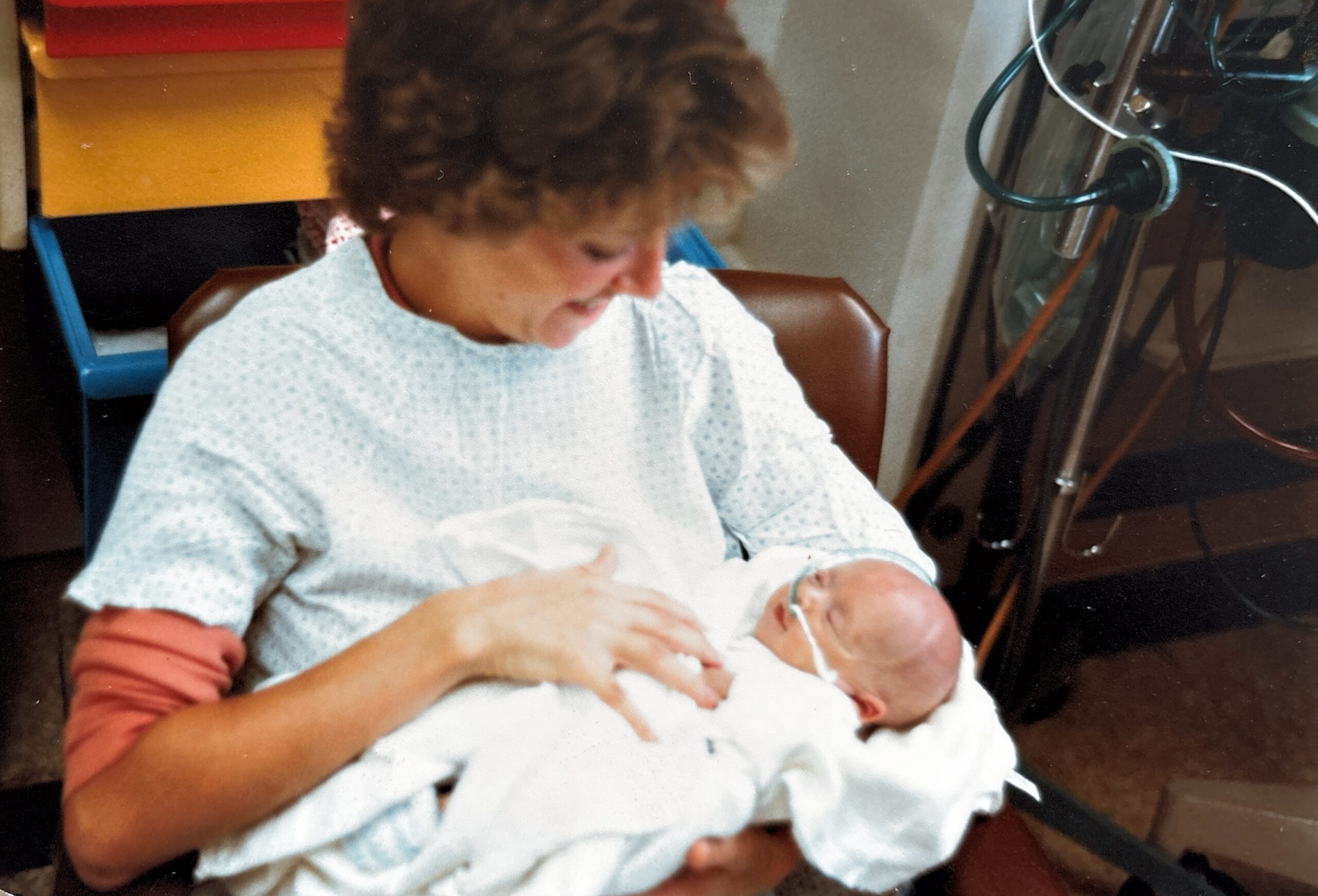
We would arrive at the hospital each morning with hearts full of hope, anxious to see our baby
boy, yet terrified of what we might find. All we wanted was something so simple, so natural—to
hold our son, comfort him, and bring him home. Instead, we found ourselves washing our hands
and putting on gowns to enter a sterile room that held Jacob alongside many other babies in
hooded incubators, each just three feet apart from the next.

We never knew if the night had gone well and we’d receive a good report, or if Jacob had
struggled through more complications that would bring devastating news. The uncertainty was
suffocating.

The Heartbreaking Reality

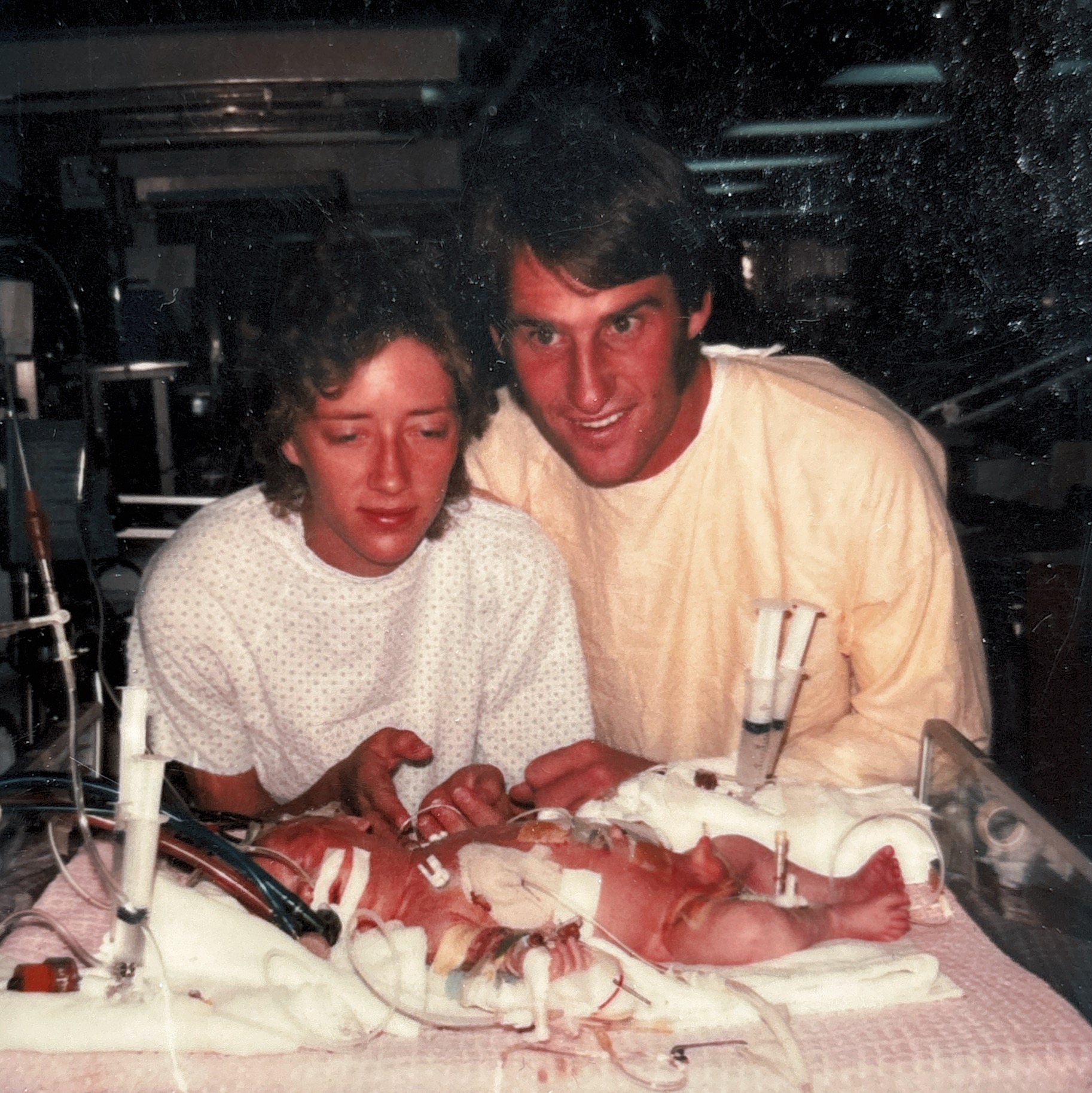
We couldn’t believe the sight of our five-pound baby. Jacob was hooked up to every life-saving
piece of equipment imaginable, leaving just a small portion of his bare body visible. The birth
itself had been traumatic—the doctor had to break his clavicle just to deliver him. He’d been in
footling breech position, and his distended belly revealed a grapefruit-sized cyst on his kidney.

But now, everything was so much worse. His lungs had collapsed. His kidneys had failed. His
heart had stopped. Our precious boy was struggling just to exist.

The monitor system, nicknamed “Mother Bird” stood guard beside him on metal legs that
resembled a stork, with a box positioned at head height holding IV lines and monitoring
equipment. Heart and oxygen monitoring tabs were attached to his tiny chest. A tube went down
his throat, another down his nose. Deep vein lines ran through his wrists.

The sight of all this medical intervention just made us cry. We felt completely helpless, unable to
even offer our son comfort. We hadn’t been able to hold him since the moment he was born.
Our hearts ached beyond description, but the worst part was imagining the pain our little baby
was enduring.

Learning a New Language

Despite these life-threatening challenges, Jacob lived, and we were truly blessed to have an
incredible team of neonatologists, nurses, therapists, and a social worker providing such
specialized care for our son.

Every day, we sat by his incubator listening intently during “rounds,” the medical team’s daily
discussions that gave us the full picture of Jacob’s condition. At first, we didn’t understand the
medical language, but over time our social worker helped us wrap our minds around terms like
intubation, blood gases, blood transfusions, femoral artery, Pseudomonas, and countless other
crucial medical concepts.

We became reluctant experts in a language we never wanted to learn.

The Day Everything Changed

Then came the day we learned what EEG meant. We just couldn’t believe it. The test showed
Jacob’s brain activity was severely abnormal. What? How?

That day, we had to reconcile with a harsh new reality. Jacob wasn’t doing well. It meant our
son was alive, but significant damage had been done. The implications were staggering, and
our hearts broke all over again.

When Science Meets the Miraculous

But then, defying all the rules of science, something extraordinary happened. Jacob had another
EEG. This time, it was NORMAL.

Again we asked: What? How?

God had stepped in and turned everything around. Hope was stirred in our hearts like nothing
else we’d ever experienced. A genuine miracle had taken place right before our eyes,
documented in medical charts and witnessed by a team of doctors who had no scientific
explanation for what they were seeing.

Medical predictions are one thing, but God knows the future. This wouldn’t be the last time
Jacob would defy the experts’ expectations. He would go on to surprise them again and again.

What No One Tells You

What no one tells you about spending 137 days in the NICU is that you don’t just witness
medical care—sometimes you witness the impossible. You learn that hope and heartbreak can
coexist in the same moment. You discover that miracles don’t always look like Hollywood magic;
sometimes they look like a normalized EEG when all medical science said it should remain
abnormal.

You learn that love doesn’t require understanding, and that faith often grows strongest in the
sterile glow of hospital lights, surrounded by the steady beep of machines that are keeping your
child alive.

Most importantly, you learn that some stories are bigger than medicine can explain—and that’s
exactly where miracles live.

This is part two of Jacob’s story—137 days that taught us the difference between medical
predictions and divine possibilities.

Stories
Back to Blog

The Day Doctors Asked Us to Let Our Son Die

The Day Doctors Asked Us to Let Our Son Die

Author: Ken and Mary Sue Grein

Written: July 29, 2025

There are moments in life that split your world into “before” and “after.” For us, that moment
came in a sterile room just off the intensive care unit, when our newborn son Jacob was just one
week old.

When the World Said “No”

We were only 22 years old when we faced an unimaginable conversation. The NICU doctor had
called us in to discuss Jacob’s condition—he would be severely disabled, the prognosis was
poor, and his quality of life would be grim. The recommendation was clear: end his life so we
could move on with ours.

The words hit us like a bomb to our hearts. Here was our son, alive and breathing, and the
medical establishment was suggesting that Jacob was unfit to live. The underlying message
was chilling: the world has an agenda to eliminate people like our son.

But in that devastating moment, something profound shifted within us.

The Decision That Changed Everything

Where others saw a burden, we chose to see a life worth living. Where fear whispered of
unknown challenges ahead, we chose faith. The scales tipped from terror of the uncertain future
to confidence in something greater than our circumstances.

We realized we were no longer going to live our lives for ourselves. This wasn’t just about
Jacob—it was about surrendering our entire family’s journey to a higher purpose.

With tears streaming down our faces in that hospital room, we raised our hands and offered a
simple but life-altering prayer: “We surrender our baby to you, Lord.” It was a moment of
complete trust despite the unknowable road ahead.

A Life Transformed by Love

That decision planted a stake deep in our souls. For the next 37 years, our lives would be
shaped by that moment of choosing love over fear, faith over convenience. We put our own
needs on the back burner, embracing a new life fully surrendered to caring for Jacob.

The memory still brings intense emotions decades later. Now at 66 years old, we still shake our
heads in disbelief at that day when medical professionals recommended ending our son’s life.
Yet we also recognize it as the moment that ignited every decision that followed—the moment
that shaped our family’s entire journey.

The Deeper Truth

Our son’s story reveals an uncomfortable reality: eugenics didn’t end in the 20th century. It still
whispers in hospital corridors, dressed in clinical language about “quality of life” and “moving
on.” But it also reveals something more powerful—that when parents choose love over fear,
when we surrender the unknown to faith, extraordinary transformations happen.

Not just for the child who was deemed “unfit to live,” but for the entire family who chose to see
him as a life worth living.

Our story reminds us that some of life’s most profound purposes are found not in avoiding
difficulty, but in embracing it with love. Sometimes the very lives the world wants to discard
become the ones that teach us most about what it truly means to live.

This is the beginning of Jacob’s story—a 37-year journey of a family who chose love when the
world suggested otherwise.

Stories